
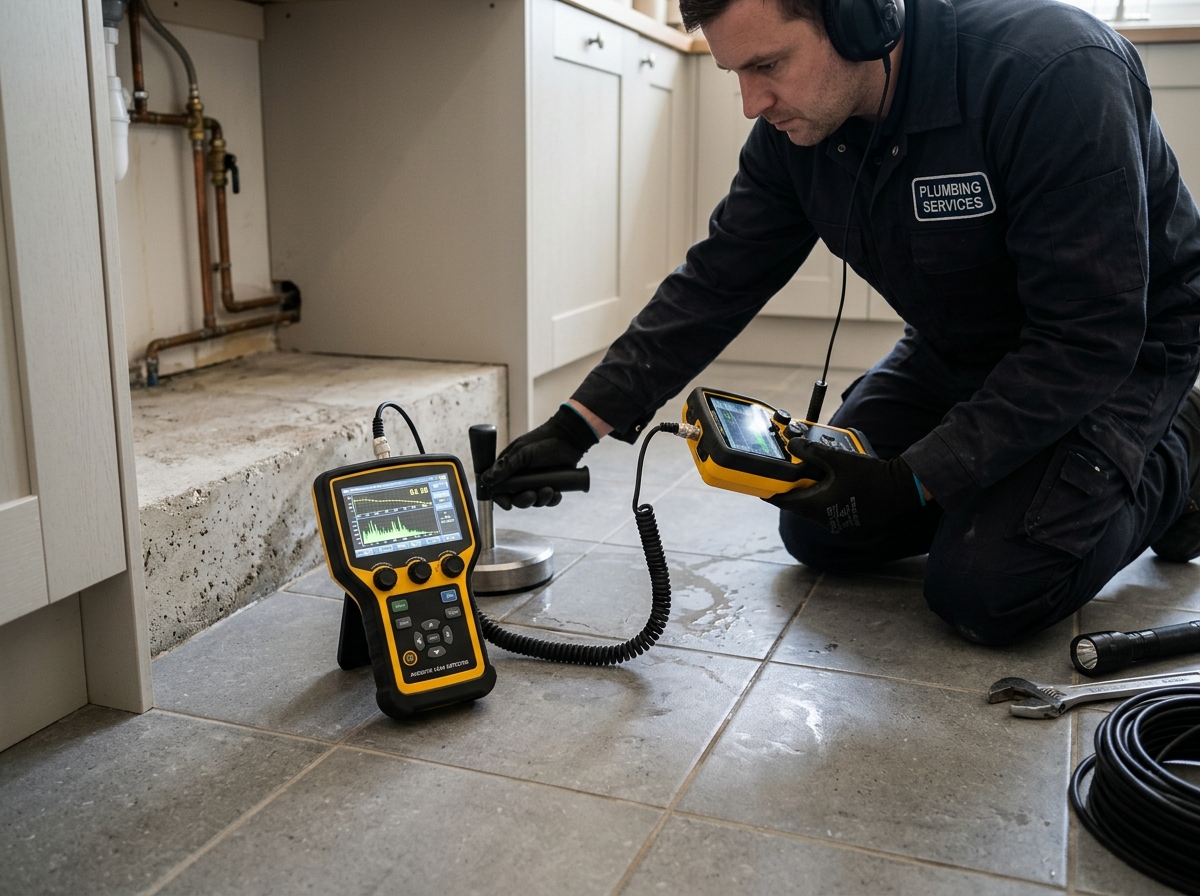
Non-Invasive Diagnostic Technology for Concrete Slabs
When water leaks under a concrete foundation, blindly breaking up tile, engineered hardwood, or carpet based on guesswork causes thousands of dollars in unnecessary property destruction. Professional slab leak detection Livermore utilizes electro-acoustic listening discs, high-frequency pipe transmitters, infrared thermography, and digital pressure differential analysis to trace pipes and map the exact rupture point through up to six inches of concrete.
Whether your home is located in Springtown, Downtown Livermore, or near the Livermore Valley wine corridors, modern non-destructive testing eliminates speculation and prepares your property for targeted, cost-effective slab leak repair in Livermore.
Warning Signs You Need a Slab Leak Test Livermore
Foundation leaks often develop slowly before producing obvious surface flooding. Watch for these diagnostic indicators:
- Continuous Water Meter Movement: Turning off every fixture in the home while the small red or blue indicator dial on your outdoor meter continues rotating.
- Muffled Rushing Sound: A distinct acoustic hiss or water turbulence audible near baseboards, kitchen islands, or laundry rooms when taps are off.
- Hot or Warm Floor Sections: Localized floor areas that feel unnaturally warm to bare feet, commonly signaling a hot-water domestic supply line failure.
- Sudden Water Bill Increase: Utility statements showing several hundred or thousand gallons of unmetered water usage.
- Damp Concrete or Baseboards: Discoloration or moisture wicking up drywall edges or flooring planks near foundational walls.
Step-by-Step Leak Under Slab Detection Livermore Process
Locating an underground pipe leak requires a methodical diagnostic protocol to confirm the breach, isolate the system branch, and locate the physical pipe trajectory:
We begin by inspecting your water meter and installing precision digital pressure gauges on your plumbing system. By shutting off the house supply valve and monitoring gauge decay, we verify whether an active pressure loss is occurring on the pressurized domestic water lines.
Next, we isolate the water heater cold-water supply inlet. If pressure stabilizes when the water heater is isolated, the leak is located on the hot water distribution side. If pressure continues dropping, the cold-water loop under the slab is confirmed as the compromised line. See our guide on hot water slab leak repair.
To know where to listen, we induce a low-frequency electromagnetic signal onto the copper plumbing lines. Using a handheld receiver wand, we trace the exact path of the pipe buried below your concrete slab, marking its trajectory across your home’s floorplan.
Water escaping pressurized pipes produces distinctive acoustic frequencies. Using ground contact microphones, high-gain acoustic amplifiers, and sound-isolation headphones, we scan along the traced pipe route to identify the peak decibel reading where water is escaping under the foundation.
For hot-water lines, thermal imaging cameras reveal heat signatures penetrating through concrete and subflooring, visually corroborating acoustic findings and ensuring pinpoint accuracy.
Why Accurate Location Keeps Concrete Breaking to a Minimum
Historically, plumbers without electronic detection gear would break open large trenches through living room floors, bathrooms, and kitchens searching for underground water. Accurate acoustic and electronic detection narrows the breach location down to an area typically no larger than a standard floor tile.
This precision allows homeowners to make an informed choice between a small, single-spot excavation or a non-destructive overhead slab leak reroute, preventing thousands of dollars in ruined hardwood or tile floors.
What the Comprehensive Written Leak Report Includes
Following every diagnostic evaluation, homeowners receive a detailed written leak detection summary. This technical document is critical for insurance documentation and contractor repair planning, containing:
- Exact photographic mapping of the detected leak position on your floor plan.
- Confirmation of whether the breach is situated on hot or cold pressurized plumbing.
- Pressure test readings and rate-of-loss decay measurements.
- Thermal imaging captures showing thermal bloom and heat signatures.
- Clear recommendations outlining the viability of a spot repair versus an overhead pipe reroute.
Need assistance filing paperwork with your insurance company? Review our slab leak insurance documentation guide.